

In industrial and sanitary piping systems, choosing the right flange is crucial for performance, safety, and hygiene.
Stainless Welding Neck Flanges (with neck) and Plate Flange (slip-on flanges) are among the most popular choices for pipelines
in food processing, dairy, beverage, pharmaceutical, and chemical industries.
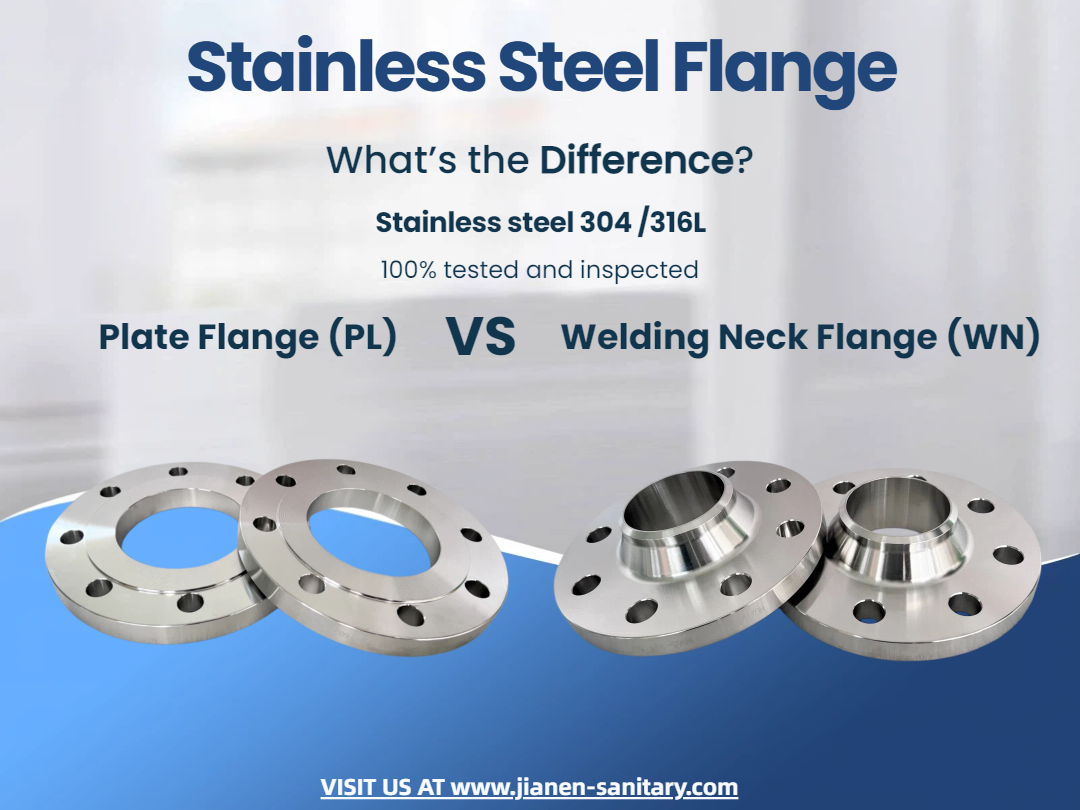
1. Structural Design
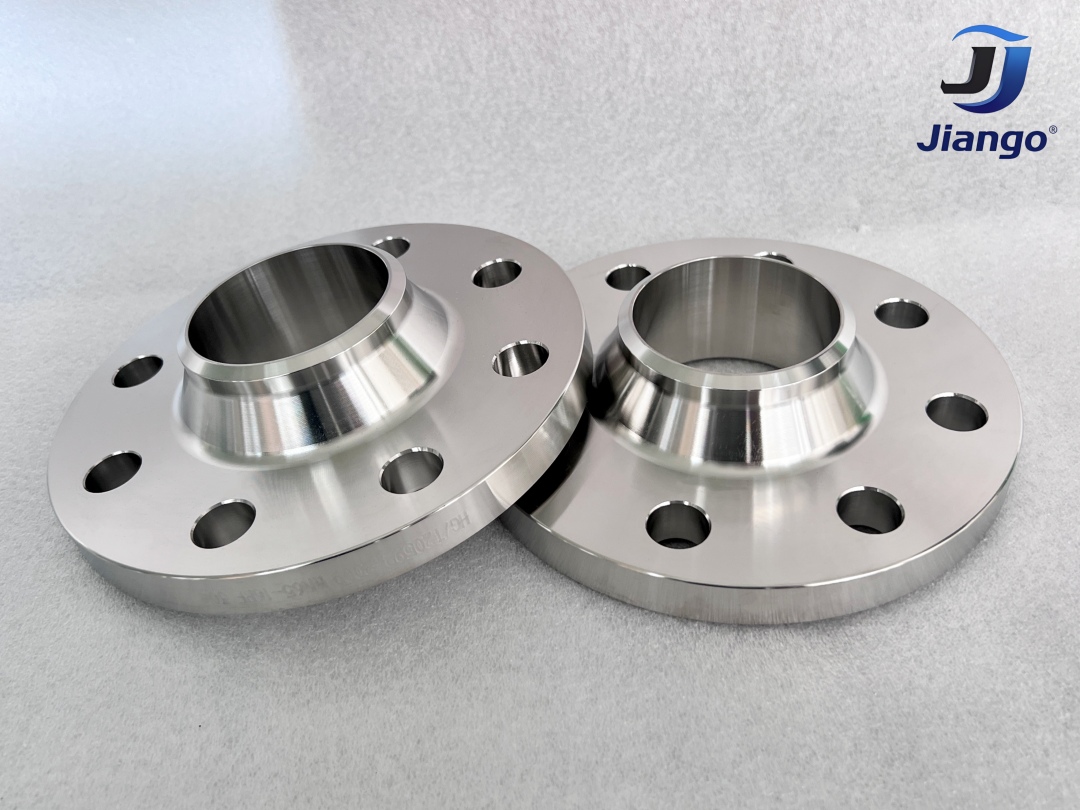
A weld neck flange features a long tapered neck that provides excellent stress distribution and high mechanical strength.
In contrast, a plate flange is flat with no neck, making it compact and lightweight.
2. Installation Method
Weld neck flanges require precise alignment and full penetration welding, ensuring a strong and leak-proof connection.
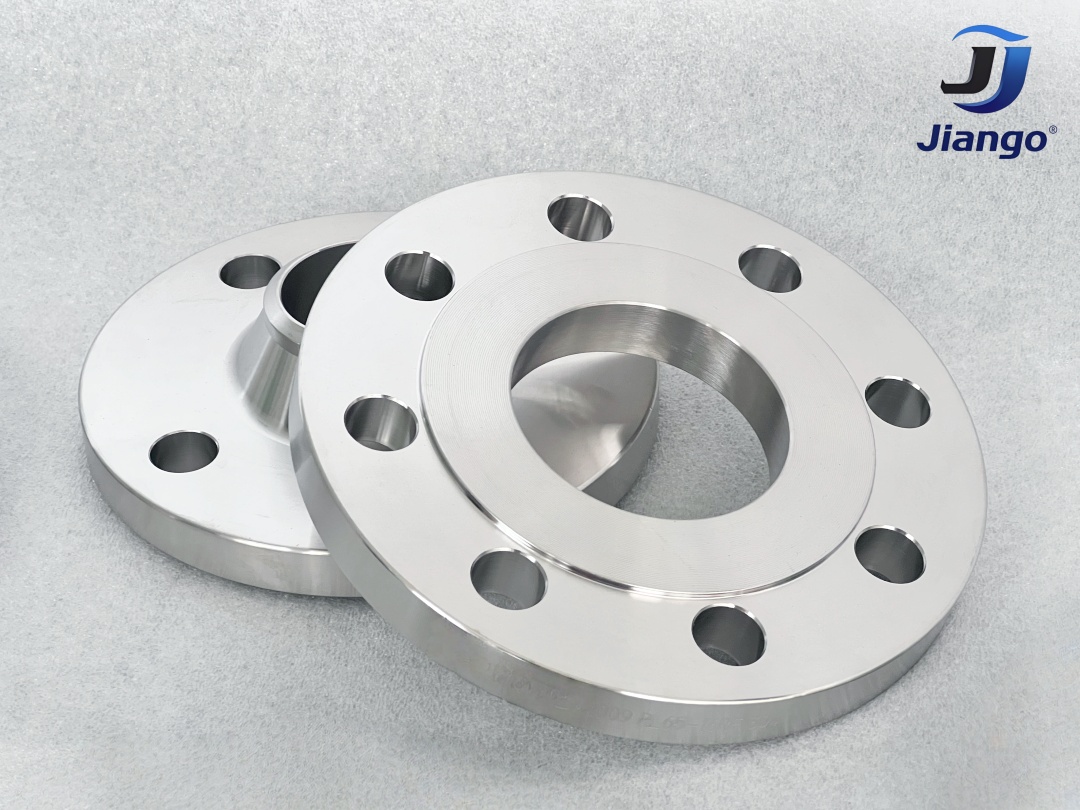
Plate flanges are slipped over the pipe and welded on the inner and outer sides, allowing easier installation, especially for shorter pipelines.
 3. Application Advantages
Weld neck flanges are ideal for high-pressure, high-temperature, or critical sanitary applications due to their superior structural integrity.
Plate flanges are cost-effective and suitable for low-to-medium pressure pipelines, especially when quick assembly or disassembly is required.
4. Material & Hygiene
Both sanitary flanges are commonly manufactured in SS304 or SS316L stainless steel,
offering excellent corrosion resistance and suitability for hygienic environments.
Choosing between a weld neck flange and a plate flange depends on pressure requirements, pipeline layout, and maintenance needs.
Understanding the differences ensures the right stainless steel flange is selected for long-lasting, safe, and efficient operation.
Keywords: stainless steel flange, slip-on flange, plate flange, weld neck flange, SS304, SS316L, sanitary piping, food processing, dairy, beverage, pharmaceutical.