

As liquid cooling technology becomes increasingly important in data centers, AI computing infrastructure,
battery energy storage systems (BESS), and industrial equipment, the demand for reliable flow control solutions continues to grow.
Stainless steel valves play a critical role in ensuring the efficiency, safety, and long-term performance of modern liquid cooling systems.
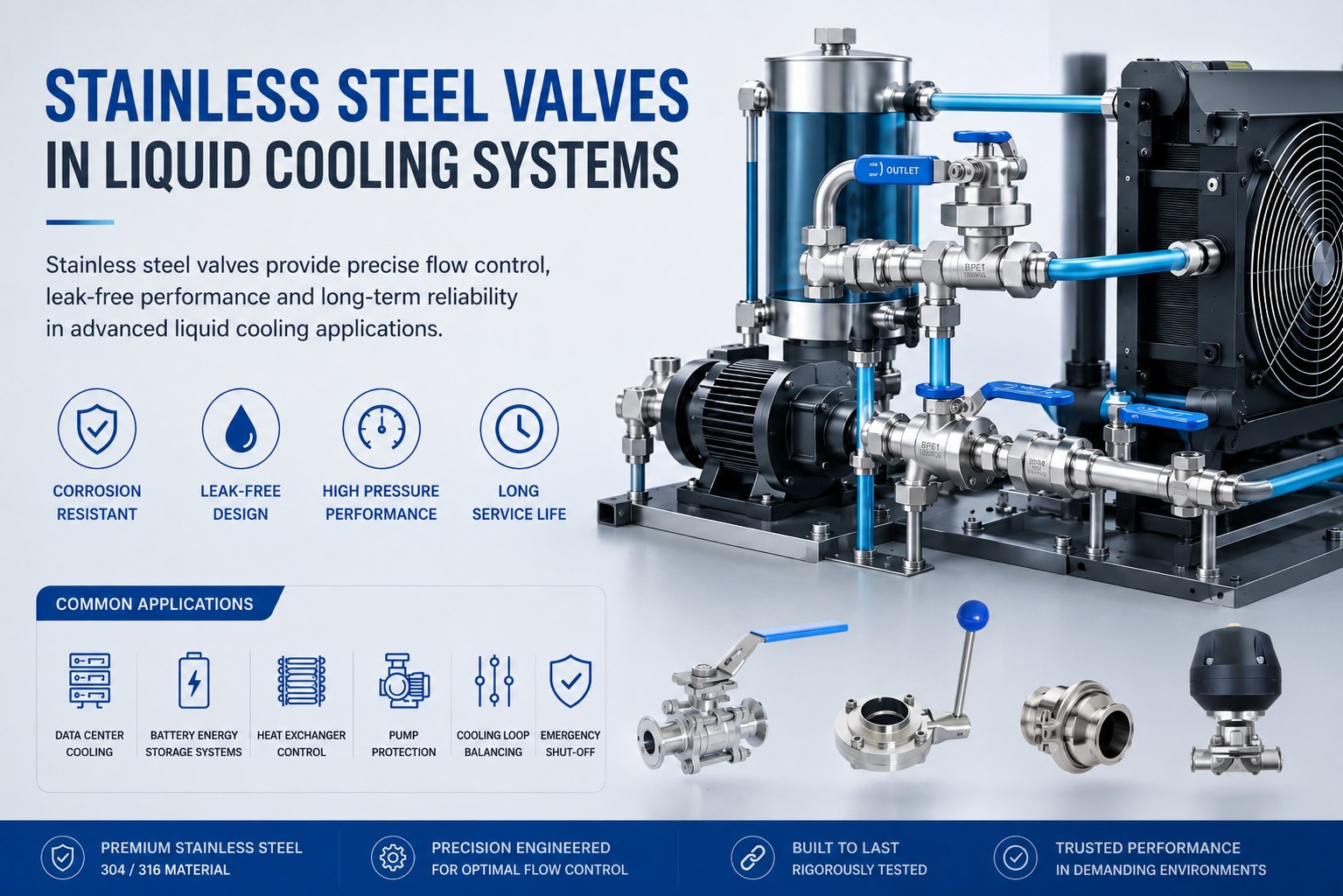 Why Stainless Steel Valves?
Liquid cooling systems require precise coolant management to maintain optimal operating temperatures.
Stainless steel valves provide excellent corrosion resistance, high mechanical strength, and outstanding durability, making them ideal for demanding cooling applications.
Materials such as SS304 and SS316L are widely used due to their ability to withstand aggressive coolants, pressure fluctuations, and continuous operation.
Common Valve Applications in Liquid Cooling Systems
Stainless steel valves are commonly installed for:
* Coolant flow regulation
* System isolation and maintenance
* Heat exchanger control
* Pump protection
* Cooling loop balancing
* Emergency shut-off functions
These valves help maintain stable coolant circulation while minimizing the risk of leakage and system downtime.
Key Benefits
1. Superior Corrosion Resistance
High-quality stainless steel valves resist rust and chemical attack, ensuring long service life and clean coolant circulation.
2. Reliable Leak Prevention
Precision manufacturing and robust sealing designs help maintain secure and leak-free operation.
3. High Pressure and Temperature Capability
Stainless steel valves perform reliably under varying operating conditions found in advanced cooling systems.
4. Reduced Maintenance Costs
Their durability and resistance to wear help lower maintenance requirements and improve system uptime.
Choosing the Right Valve
Selecting the appropriate valve depends on system pressure, flow rate, coolant type, and operating temperature.
Common options include ball valves, butterfly valves, check valves, and control valves, each designed to meet specific flow control requirements.