

Selecting the right pipe fittings and matching them with suitable sanitary valves is key to achieving stable flow control, safety, and long service life.
1. Choosing Stainless Steel Pipe Fittings
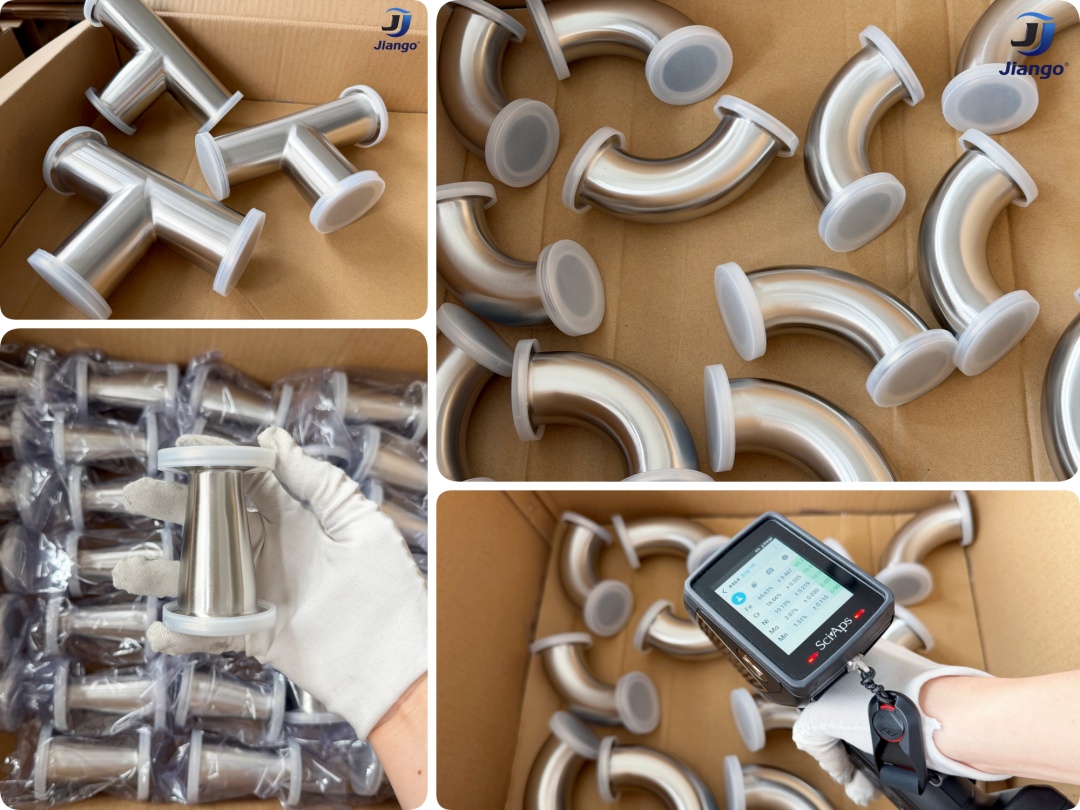 The selection mainly depends on material grade, fitting type, and surface finish.
Material:
304 stainless steel: general industrial use
316L stainless steel: higher corrosion resistance, ideal for sanitary and high-purity systems
Common fittings:
Elbows, tees, reducers, butt-weld fittings, and tri clamp fittings are widely used to connect and redirect pipelines.
Surface finish:
Ra ≤ 0.8 μm for standard sanitary use
Ra ≤ 0.4 μm for high-purity applications
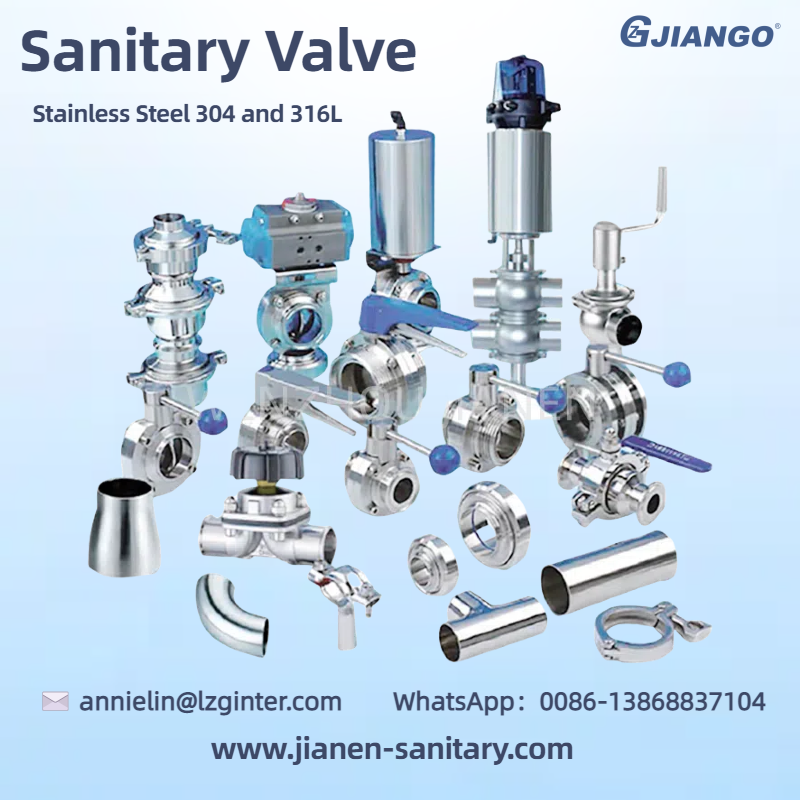 2. Common Valve Types for Matching
Different valves work together with pipe fittings to control flow and system safety.
Ball Valve: Fast shut-off, reliable sealing, widely used in industrial pipelines
Butterfly Valve: Compact design, suitable for large-diameter systems
Check Valve: Prevents backflow and protects equipment
Diaphragm Valve: Ideal for sanitary and corrosive media systems
Elbow + Butterfly Valve → compact flow direction control
Tee + Ball Valve → flow distribution or mixing
Reducer + Check Valve → pressure control with backflow protection
Clamp Fittings + Diaphragm Valve → quick installation in sanitary systems
3.Application Industries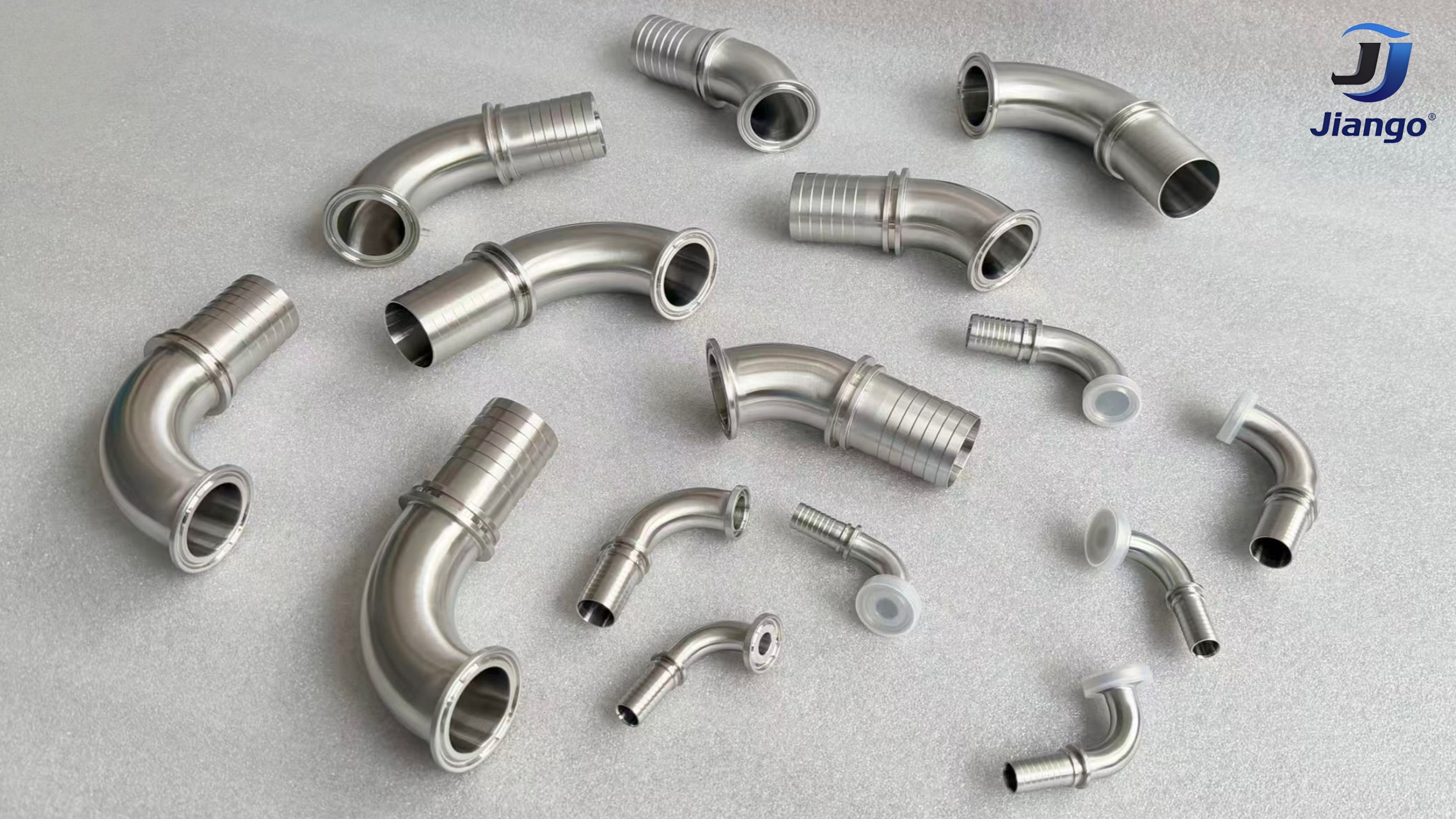
These systems are widely used in:
Food and beverage processing
Pharmaceutical and biotech production
Chemical and industrial plants
Data center liquid cooling systems
Water treatment systems
A proper match between stainless steel fittings and valves ensures efficient flow, system stability, and reduced maintenance costs. Material selection and system design should always follow application requirements and industry standards such as 3A DIN, ISO, and ASME BPE.